Choosing between a compact motorised exerciser and a full active–passive trainer is rarely about which brochure looks nicest. It is about where the client trains, what you need the session to achieve, and how much load and feedback the plan requires. The notes below are a practical frame for conversations with families, funders, and inpatient teams — not a replacement for assessment and manufacturer instructions.
Space and the home environment
Apartments, granny flats, and shared wards all impose real limits on footprint, turning radius, and storage. A tabletop or narrow-base motorised unit can live beside a chair or bed with minimal rearrangement of furniture. A full recumbent active–passive trainer needs a stable floor, room for carers, and often a wider path from delivery to final position. When space is tight but upper- and lower-limb work is still required, a height-adjustable dual trainer (such as the Supapedal Syncra) often sits in the middle: more capable than a single-purpose mini bike, yet less demanding than a clinic-scale recumbent platform.
Larger machines and higher training dose
Building muscle strength and cardiovascular fitness usually calls for sustained work against meaningful resistance, repeatable posture, and progress tracking across weeks. Compact devices excel at frequent light-to-moderate sessions and early mobilisation. Heavier frames, longer cranks, and integrated software on larger trainers (for example the Rehamoto LGT-5100D) support higher resistance ranges, symmetry visualisation, spasm-related motor logic, and wheelchair-seated setups where those are part of the clinical brief. In other words: small is not worse — it is aimed at a different job — but when cardio loading and structured neuro-rehab features dominate the goals, stepping up the equipment class is often appropriate.
Other factors that steer the decision
- Transfers and seating: whether the person trains from their own wheelchair, a plinth, or a standard chair changes which fixation and height options matter.
- Upper limb only, lower limb only, or both: convertible single-column units versus synchronized dual-limb trainers address different therapy designs.
- Supervision and cognition: simpler displays and large controls suit independent home use; richer dashboards help tech-savvy clinicians titrate sessions in outpatient units.
- Progression path: starting on a compact device and moving to a full trainer as tolerance improves is a common clinical story — our range is laid out so that upgrade story is coherent.
Match training priorities to the presentation
Select a condition for typical ways our trainers are used in practice. Individual assessment, contraindications, and programme design remain with the treating clinician.
Choose a condition above to see orientation notes for the Supapedal and Rehamoto range.
Three machines we tier from entry to flagship
Here are some of our most popular products, ranging from a simple, versatile height-adjustable exerciser (Supapedal Pro), through a professional dual-limb trainer with synchronized modes (Supapedal Syncra), to our full active–passive recumbent platform with advanced software and accessories (Rehamoto LGT-5100D). Use the cards below to jump straight to specifications and galleries.
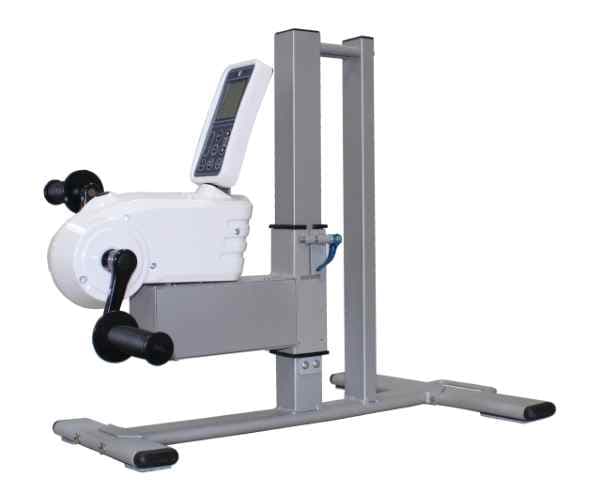
Supapedal Pro
Height-adjustable motorised exerciser for upper and lower limbs—switch between arm and leg training with a quick crank conversion.
- 2-in-1 arm and leg trainer
- Swap cranks for handles or foot pedals
- Passive and active exercise
- For home, clinic, or care
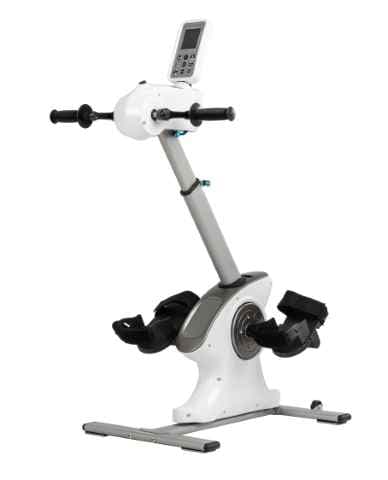
Supapedal Syncra
Professional height-adjustable trainer for full-limb rehab — hand-only, foot-only, or synchronized work.
- Hands, feet, or both together
- Active, passive, and assistive modes
- Height-adjustable; emergency stop
- For clinics, care homes, and home
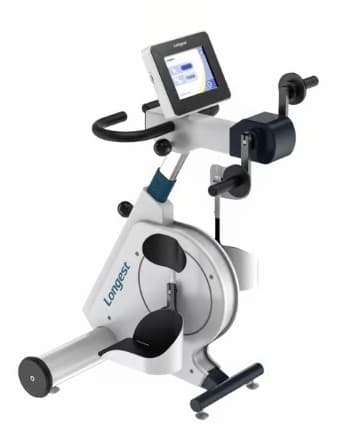
Rehamoto LGT-5100D
Recumbent rehab bike for upper and lower limbs with intelligent training modes.
- Active, passive, and assisted training; spasm handling
- Can be used from a wheelchair
- 8" touchscreen
- Paediatric model: LGT-5100DC